
A logo on the plate is one of the oldest touches in restaurant dining. Think of Josephine's red "J" on a scalloped rim, or the simple "A" on Arlington's plates. Guests notice it, photograph it, and remember where they ate.
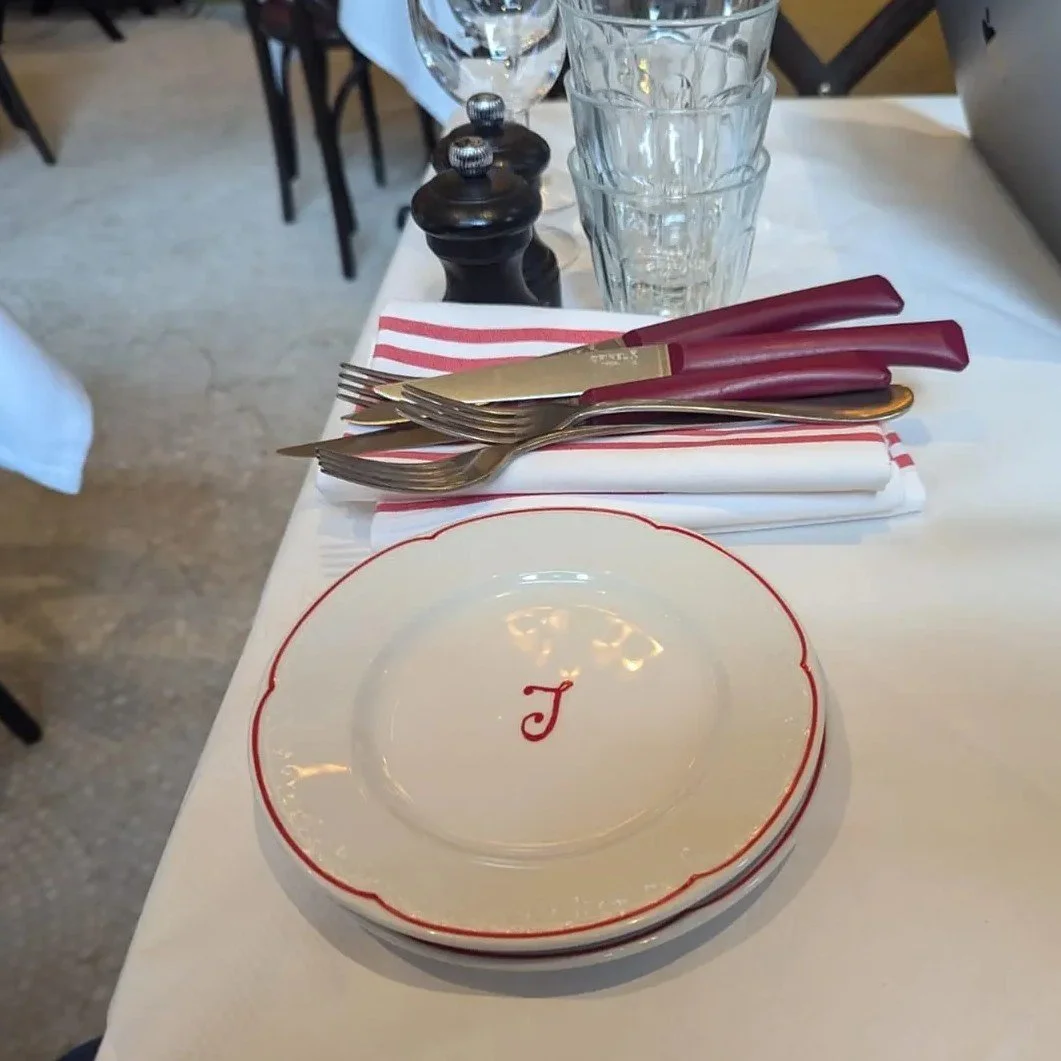
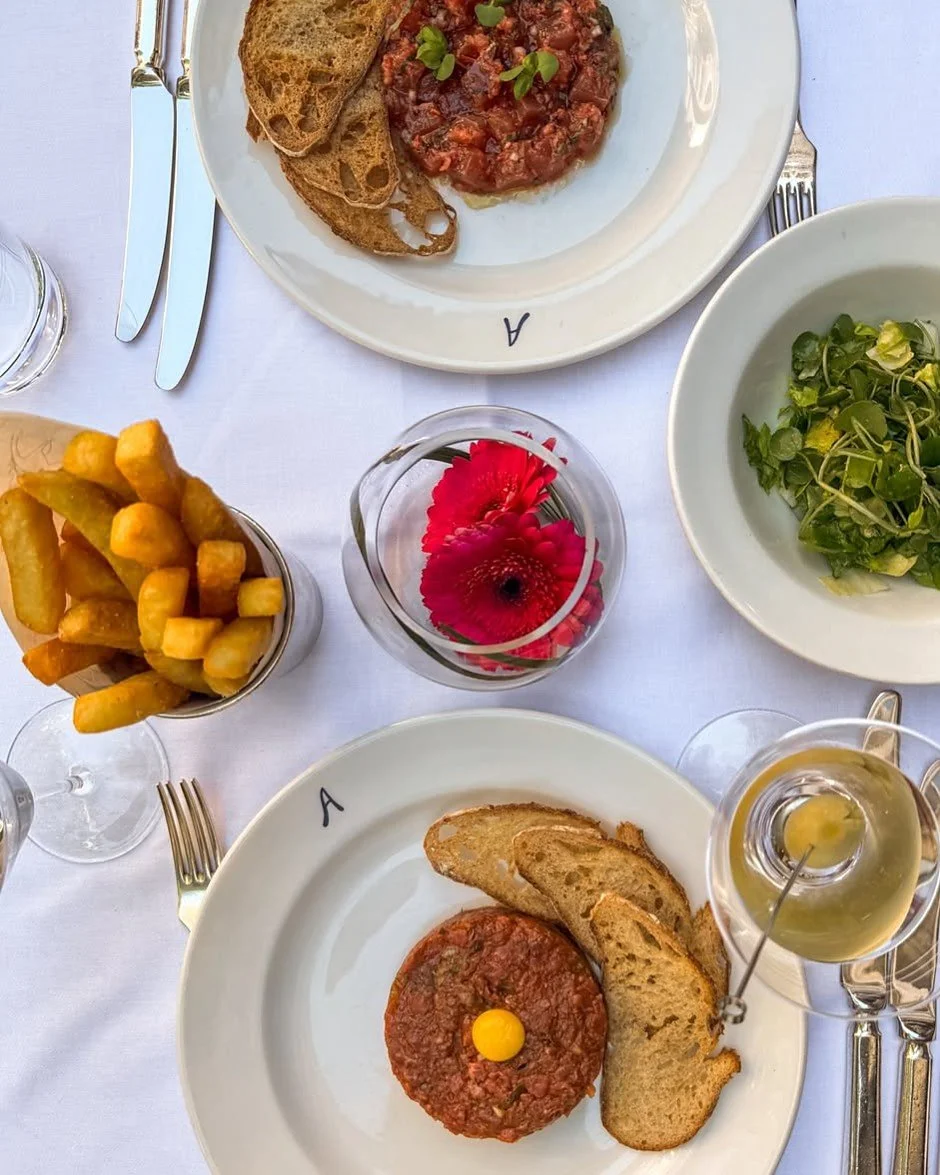
It is also more achievable than most restaurants expect. Here's how putting your logo on plates actually works.
Two ways to do it
Underglaze: the pottery applies your logo during manufacture and seals it under the glaze. It's the most durable finish, and the logo is protected for the life of the plate.
On-glaze transfer: your logo is added to plates that have already been made, then fired. It opens up more ranges, including handmade and European pieces.
For busy restaurants, underglaze from a British pottery such as Steelite or Churchill is usually the best choice.
How many do you need to order?
The minimum is counted in mixed pieces: your main plates, side plates, bowls and cups all count towards the same total.
| Pottery | First order | Repeat orders |
|---|---|---|
| Steelite | 600 mixed pieces | 300 mixed pieces |
| Churchill | 600 mixed pieces | 300 mixed pieces |
So a first order could be 204 main plates (17 boxes of 12), 204 starter plates and 192 side plates. Spread across your plates, bowls and cups, that's a realistic amount for most restaurants of 60 covers or more. A few things to know: items are ordered in full cases (usually 6, 12 or 24), so plate numbers have to match that – 204 for instance or 192 or 216.
What can carry your logo?
More than plates. Steelite offers over 150 items for badging, including plates, bowls, platters, cups, saucers and mugs. Churchill can badge pieces from any of its ranges.
The logo sits in a set position on each piece, usually on the rim, and in a size to suit it. On Steelite's ranges that's roughly 17mm to 51mm wide, depending on the plate and the shape of your logo.
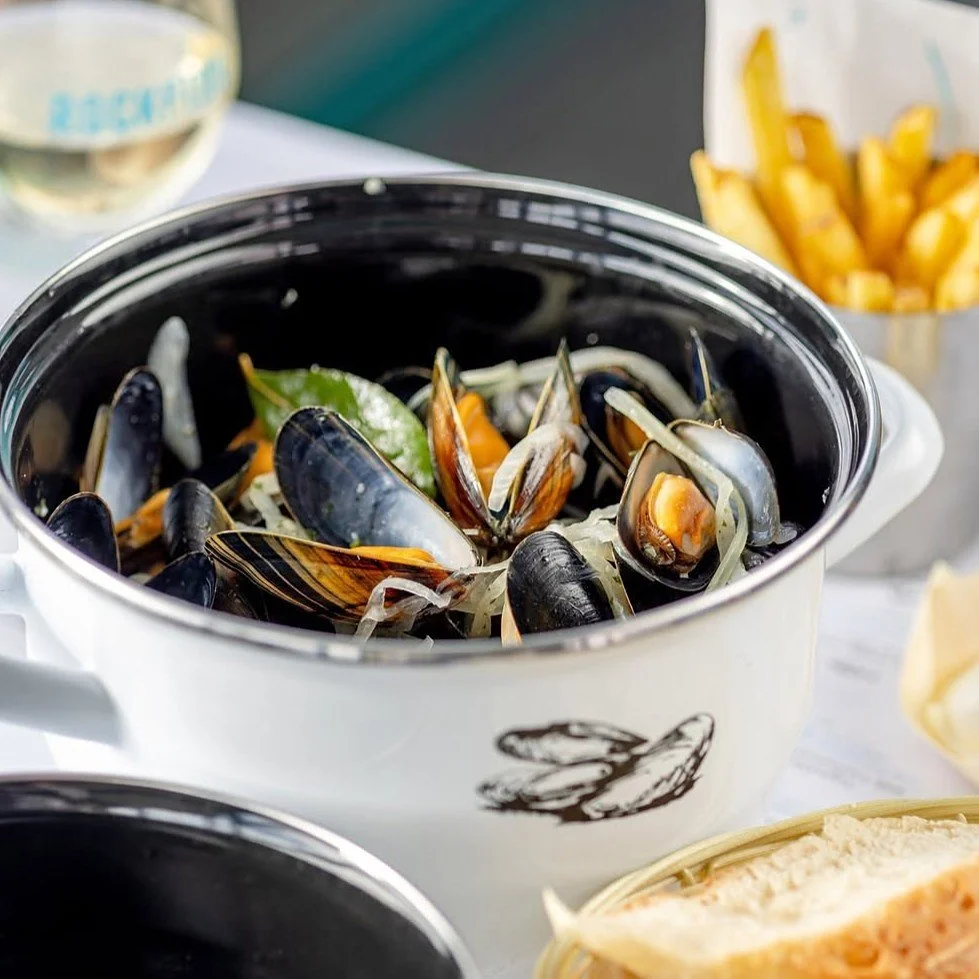
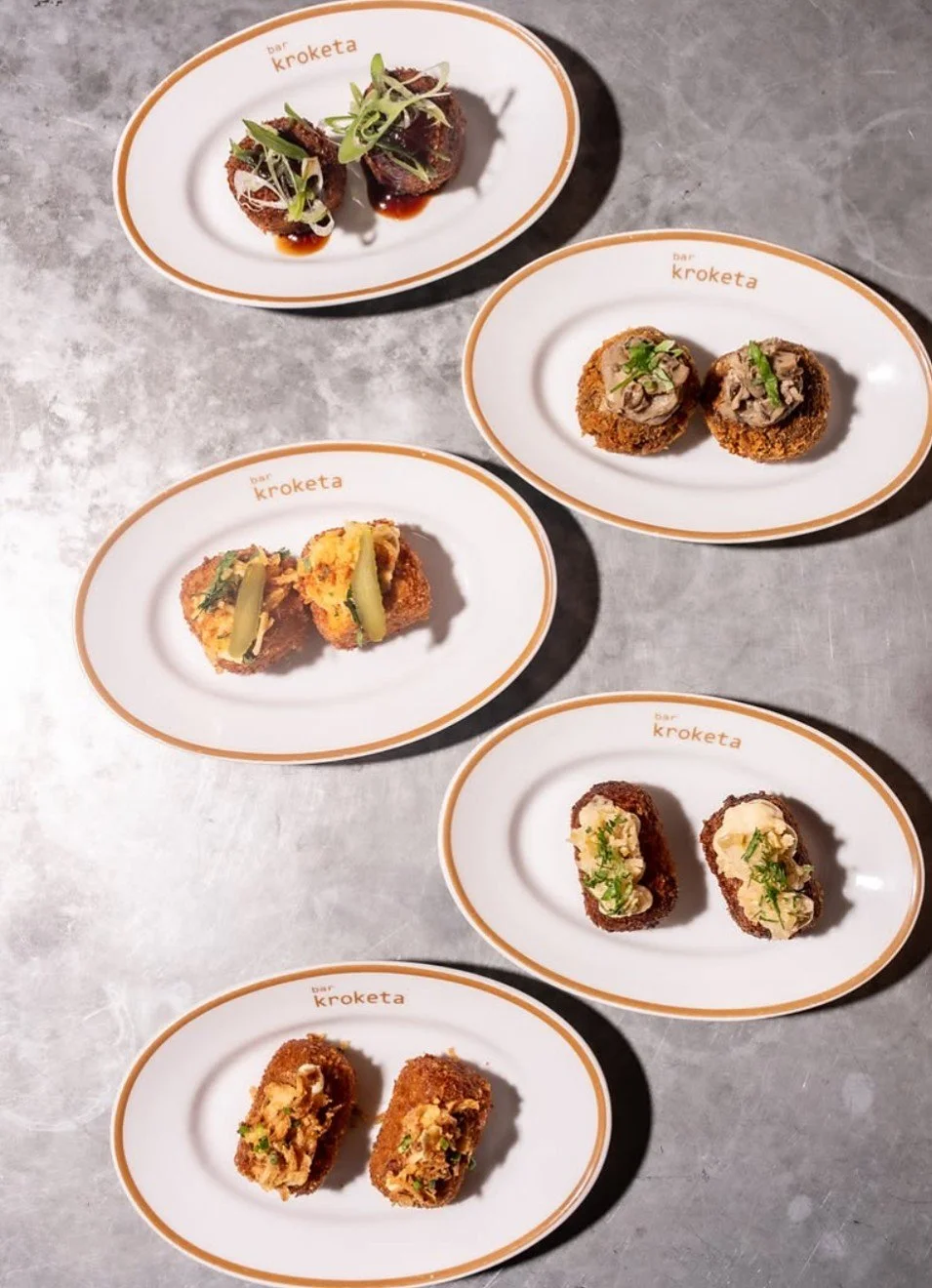
It doesn't stop at the pottery, either. We've had logos put on Bar Kroketa's oval plates, and on Rockfish's enamel mussel pots, which look great in use.
Choosing colours
Keep it simple. One colour usually looks best, and it's the most affordable.
Steelite: up to 4 colours, chosen from a standard palette of 18.
Churchill: give them your Pantone colour reference. Colours in their standard palette are quickest; other colours are possible but take a little longer.
The artwork you'll need
For plates, the pottery needs your logo as a vector file: a PDF, EPS or AI file. JPEG and PNG files can't be used. Your designer or branding agency should have one. If you only have a JPEG, send it to us anyway to get started.
You'll see it before anything is made
Every order starts with a digital visual showing your logo on the chosen pieces. You then get a fired sample: a real plate, with your logo, made the way the order will be. Nothing goes into production until you've approved it.
At Steelite, visuals take about 3 working days and a fired sample about 7 working days.
Allow 6–8 weeks
Once the sample is approved, Steelite's production takes about 30 working days, and larger orders can take longer. All in, allow 6–8 weeks from your first enquiry.
That makes branded plates the longest lead time in a typical opening. Decide on them first, at least two to three months before you open, and we can store them until opening week if your site isn't ready.
Will it last?
With underglaze decoration, your logo is protected beneath the glaze, so it stands up to commercial dishwashers and daily service. Steelite's tableware made in Stoke-on-Trent also comes with a lifetime edge-chip warranty.
Reordering
Keep a note of the exact items and colours you chose. Reorders have lower minimums (300 mixed pieces at both Steelite and Churchill), and we keep your details on file so top-ups match.
How to get started
Send us your logo, tell us which plates you like and roughly how many covers you have. We'll come back within 24 hours with options, a quote and the next steps.
Talk to us about logo printing or call 01884 266057.
Putting your logo on glasses too? Read how to get your logo printed on restaurant glasses.